Lower fuel consumption
Reduced friction coefficients mean less of the fuel's energy is spent overcoming the engine's own internal drag.
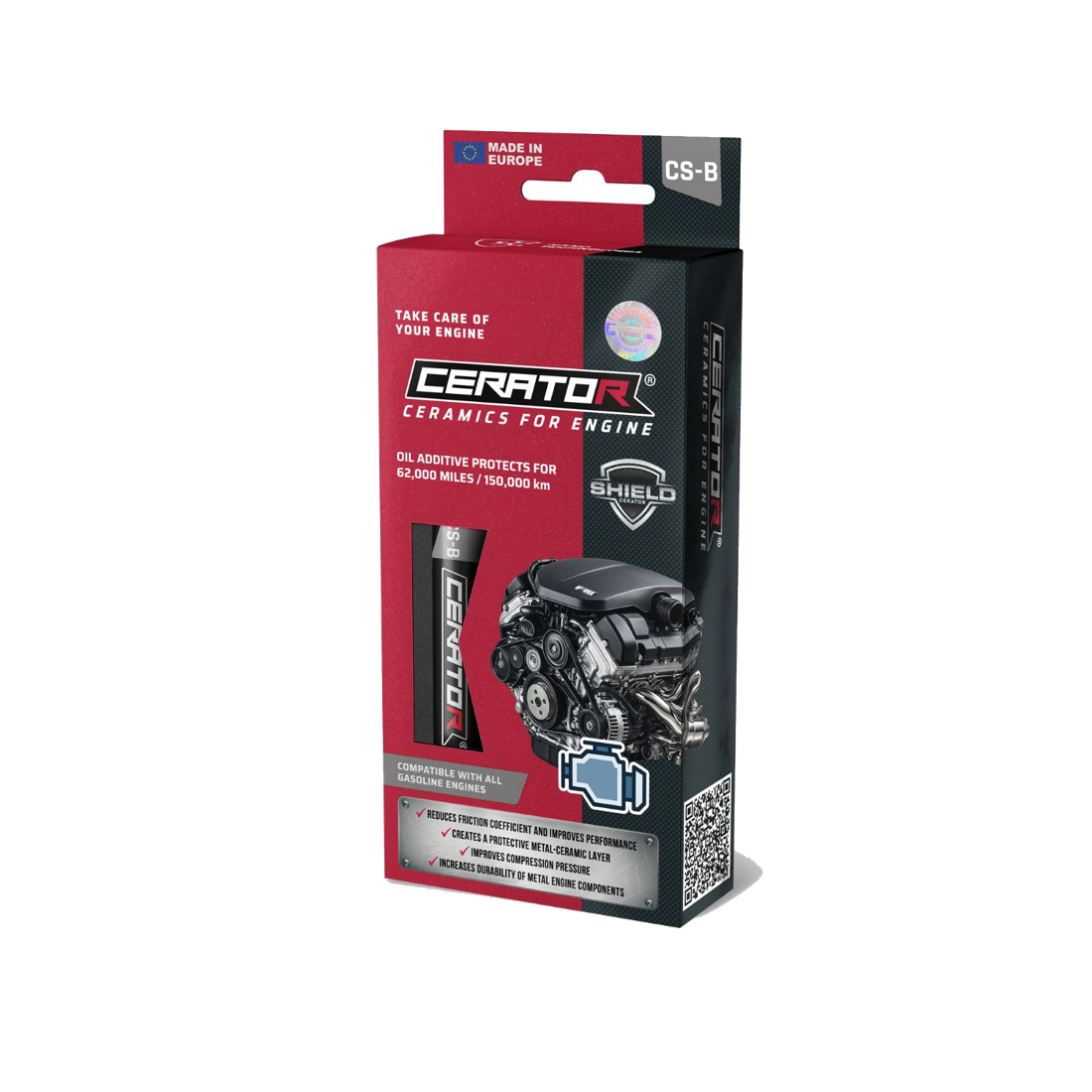
Ceramizator® is a ceramic oil additive that reacts with the friction surfaces inside a running engine and rebuilds them — forming a hard, glass-ceramic layer where wear actually happens. Less friction, better compression, longer engine life.
It is not a thickener, a stop-leak, or a viscosity booster. Ceramizator is a tribochemically active additive: it only does its work in the handful of microscopic spots inside your engine where metal is grinding against metal.
Four things have to be present for ceramization to happen — the additive's ceramic particles, bare metal, engine oil, and the heat generated by friction. Where those four meet, the particles bond into the metal surface and build a new working layer. Everywhere else, the additive simply stays in suspension and does nothing.
Nothing, chemically. Cerator® is the name the two core engine-oil formulas carry in the United States, the United Kingdom and Japan: CS‑B for gasoline engines and CS‑D for diesel. In other markets the identical products are sold under the Ceramizator name.
Ceramizator® is the parent brand and the name of the technology itself. It stays on everything else in the line-up — the Ultimate, POWER and ONE BOOST variants of CS‑B and CS‑D, plus the fuel additives, truck and off-road formulas, and motorcycle products.
Ceramization is a chemical process, not a coating you spray on. It needs specific conditions — and a running engine provides all of them.
Ceramic nano-particles with high surface activity are carried through the lubrication system by the oil.
At load peaks the oil film breaks down and metal contacts metal — exposing the surface the particles need.
The oil is the transport medium and the reaction environment. Any motor oil works; the additive is oil-agnostic.
Local flash temperatures of 200–300 °C (390–570 °F) activate the particles and drive the reaction.
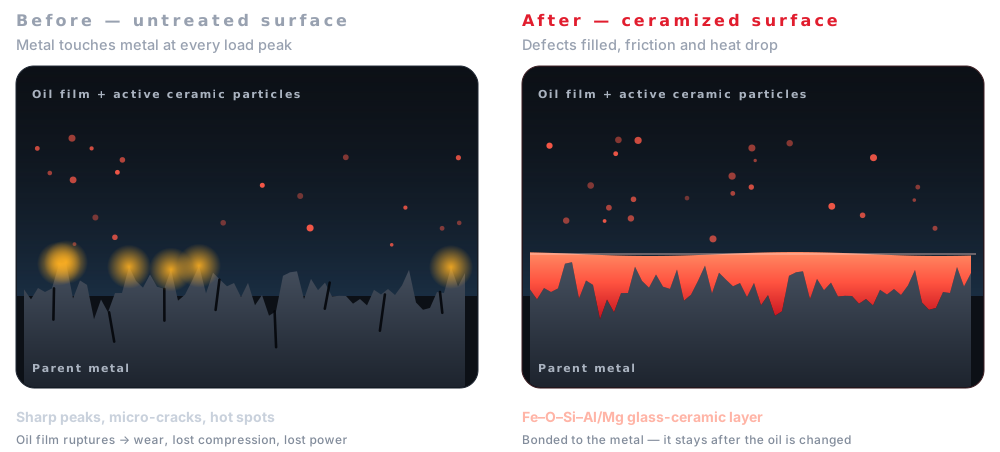
Because the reaction is driven by pressure and heat, it is self-targeting. The harder a contact point is working, the faster protection forms there. As the surface is rebuilt, friction drops, the local temperature falls, and the reaction slows down on its own.
Reduced friction coefficients mean less of the fuel's energy is spent overcoming the engine's own internal drag.
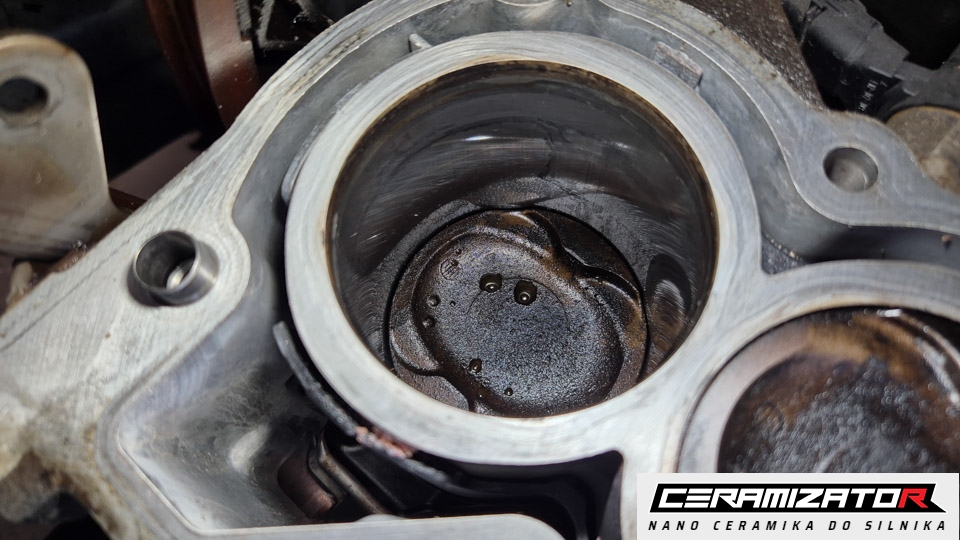
Micro-defects on cylinders, pistons and rings are filled in, which recovers the cylinder seal and the pressure it holds.
Rebuilding the working geometry of the piston-ring-cylinder group cuts the oil that slips past and gets burned.
With mechanical losses reduced and compression restored, the engine returns closer to its original output.
The bonded ceramic layer stays on the metal when the oil has drained down, protecting against dry-start wear.
Better sealing and more complete combustion lower CO2 and other harmful exhaust components.
Cylinder pressure was measured on a ten-year-old vehicle before and after treatment. Removing scoring and high spots from the cylinder walls, pistons and rings restores the seal that leaks pressure and power.
7.87 bar to 8.05 bar, measured on a vehicle with approximately 150,000 km (93,000 miles). Anti-seize and anti-wear properties were separately assessed at the Automotive Industry Institute (PIMOT) in Warsaw, Poland.
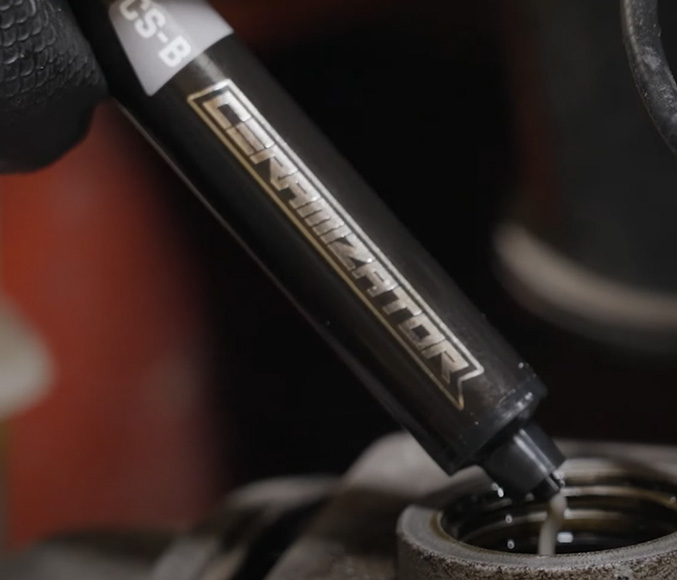
CS‑B for gasoline, CS‑D for diesel. Cerator is the classic long-life applicator; Ceramizator POWER, Ultimate and ONE BOOST cover the other service intervals.
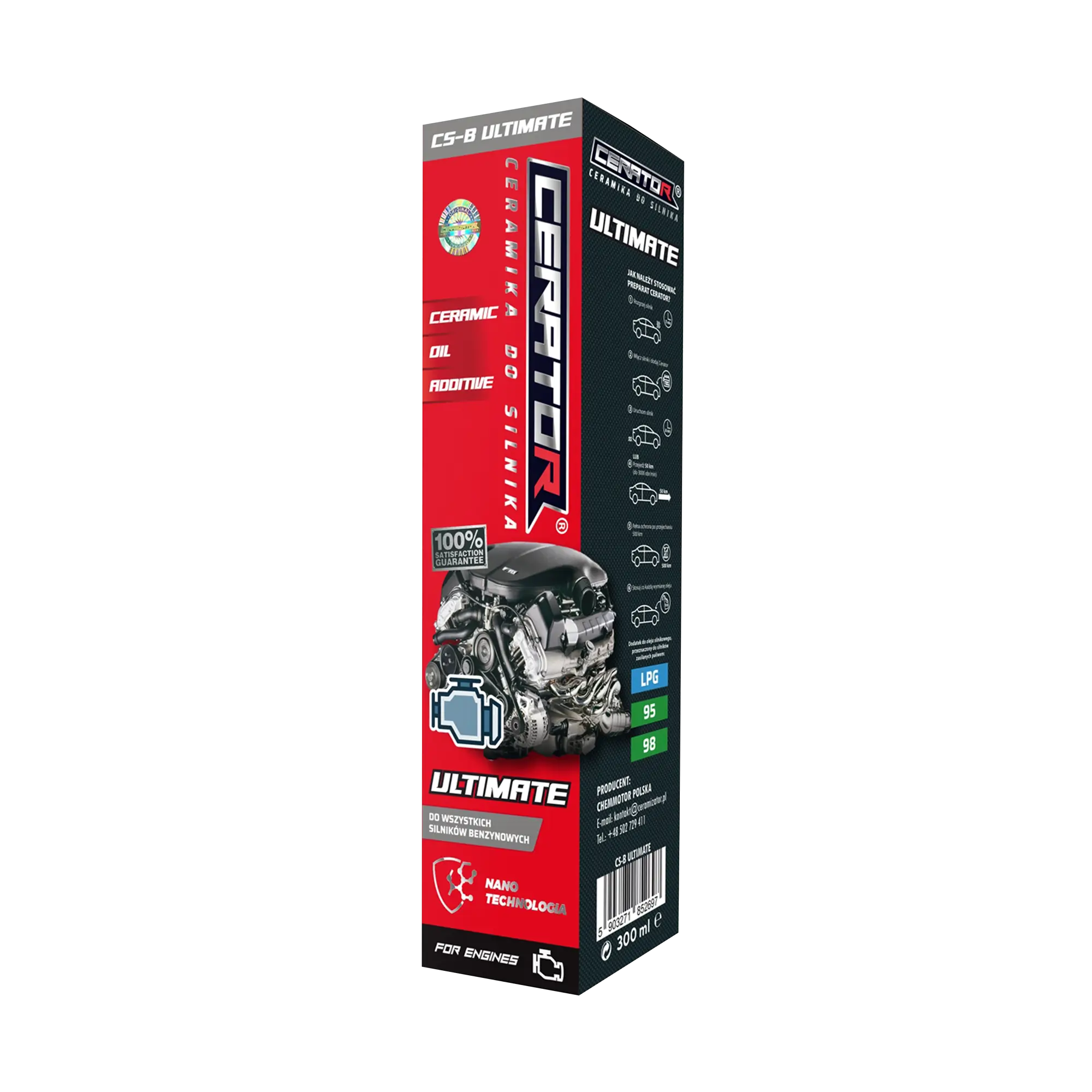
Three-component 3-in-1 formula: metal conditioner, NANO REVITAL ACTIVE ceramic revitalizer and friction modifier.
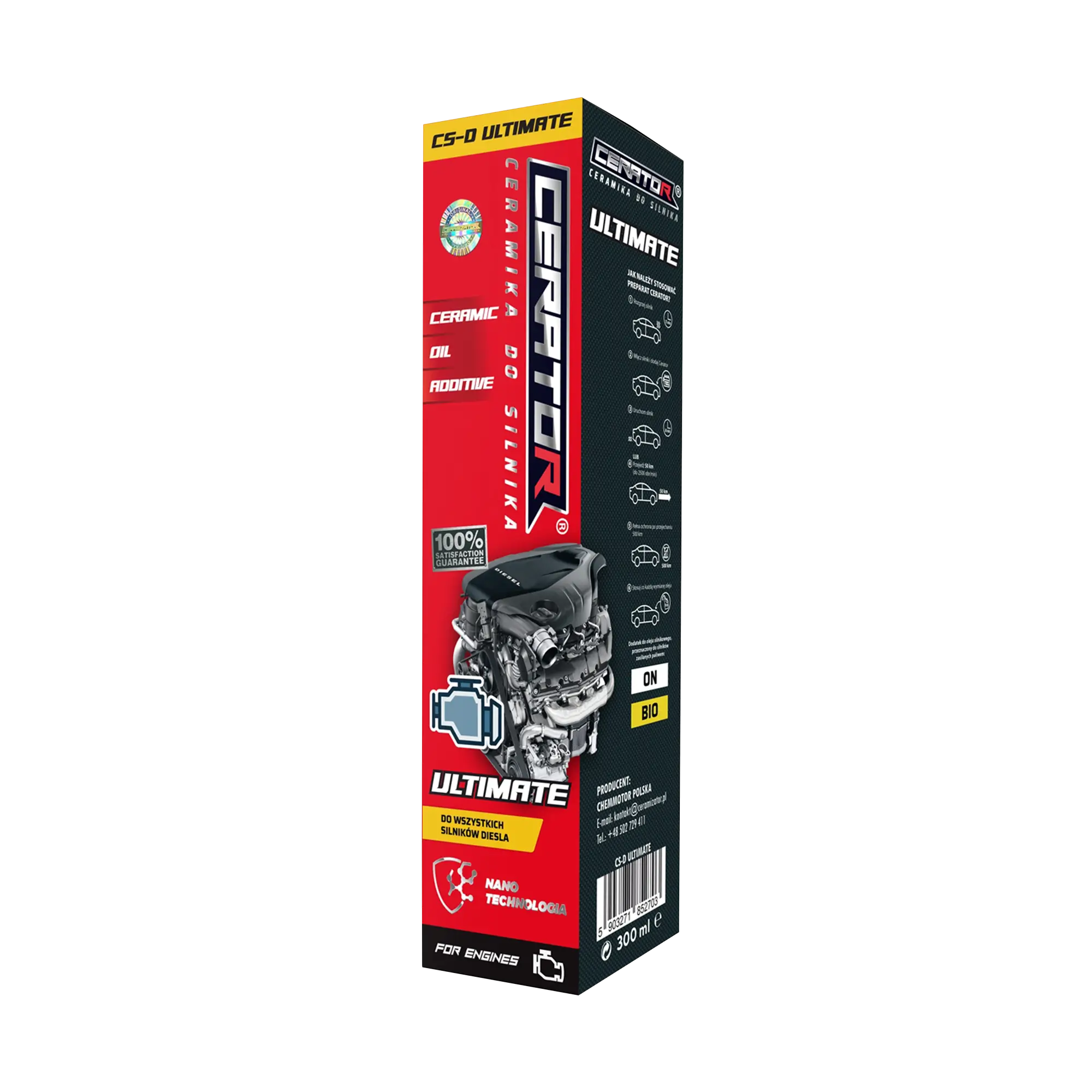
The diesel version of the flagship formula, for modern common-rail engines including those with DPF and catalysts.
The original black applicator. Nano-particle formula for everyday gasoline engines.
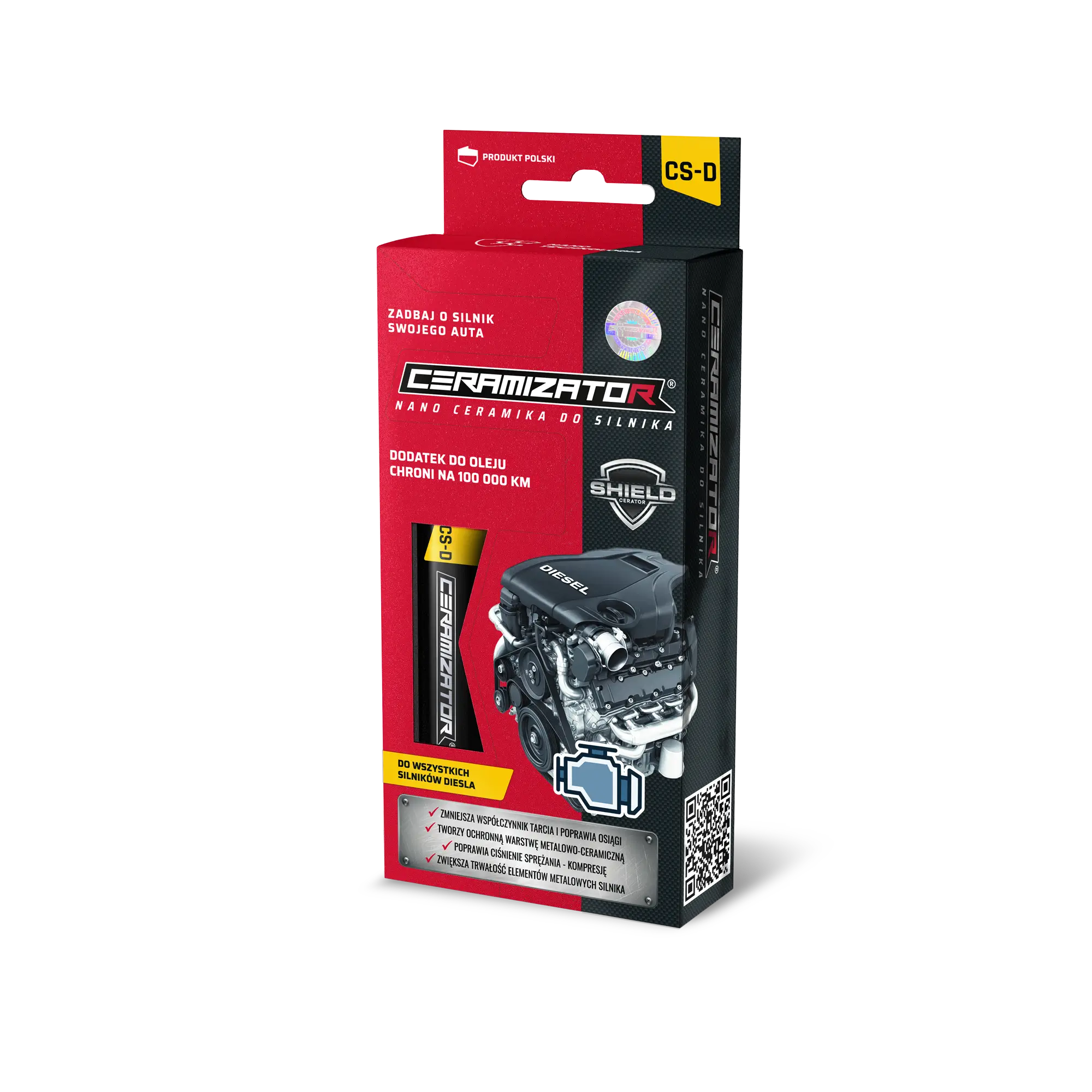
Same technology tuned for the higher pressures and soot loading of diesel engines.
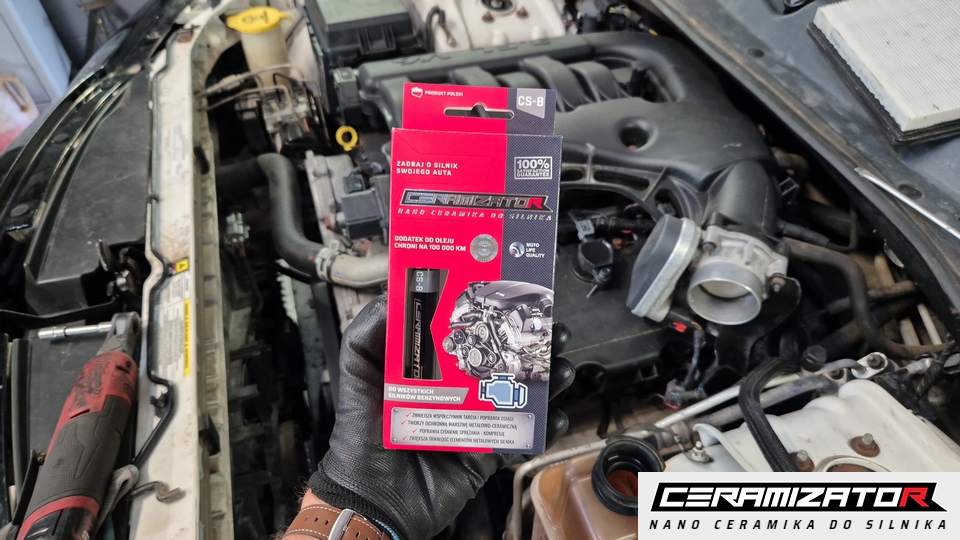
No. The glass-ceramic layer is chemically bonded to the metal surface, not suspended in the oil. It stays on the component after the oil is drained.
Yes, and it is recommended. Applied early it protects components from the first miles and helps them break in with a smoother surface finish.
The additive works selectively: it only reacts at friction points under load and heat. It does not build up where it is not needed, and it is compatible with catalytic converters and diesel particulate filters.
It is compatible with essentially any motor oil — conventional, semi-synthetic or full synthetic — because it modifies the metal, not the oil.
If you are a driver, a shop, or a distributor and want to know whether the technology fits your application, get in touch and a technical specialist will answer. Cerator CS‑B and CS‑D are available now from Amazon and eBay.